
Resilience at Sea
The Book
Every yacht drills for fire.
None of them drill for the night it all goes wrong with a person
The Resilience at Sea - the book
What to do when a crewmate is struggling, when something goes badly wrong, and when the season has taken more out of you than you realised.
BEFORE YOU START
Why this handbook exists
Every vessel has a plan for fire, flooding and man overboard. Almost none have a plan for the night a crewmate falls apart.
I have spent thirty years in emergency nursing and about twenty of them working at sea — superyachts, offshore racing, expedition vessels. In that time the thing I have been called for most often was not a medical emergency. It was a person.
A stew who stopped eating. A deckhand who came back from shore leave and would not talk about it. An engineer six months into a charter season who was drinking alone every night. A whole crew, three days after a fatality onboard, still working charter as though nothing had happened because nobody knew how to stop.
In every one of those situations someone onboard noticed early. And in almost every one, that person did nothing — not because they did not care, but because they did not know what to say, and were afraid of making it worse.
That is what this handbook fixes. It is not therapy and it does not turn you into a counsellor. It gives you a small number of things to say and do that are known to help, and a clear line for when to hand over to someone qualified.
WHAT THIS IS NOT
This is not medical training and it is not a substitute for it. Nothing here covers clinical treatment, medication, or emergency medical care. If you need those, get formally trained and get proper medical support — see the last page.
How to use it
Read it once, cover to cover. It takes about forty minutes. Then keep it where you can find it at 0200, because that is when you will need it.
Resilience at Sea — the people problems nobody trained you for.
You noticed something was wrong weeks ago. You just didn't know how to bring it up.
What do you do when it's not a medical emergency — it's a person?
I've spent thirty years in emergency nursing and about twenty of them at sea — superyachts, offshore racing, expedition vessels.
In all that time, the thing I've been called for most often wasn't a medical emergency.
It was a person.
-An owner who woke up furious and nobody could work out why.
A stew who stopped eating.
A captain three months into a season snapping at everyone and unable to see it.
A deckhand who came back from shore leave and wouldn't talk about it.
A whole crew, three days after a death onboard, still running charter because nobody knew how to stop.
Here's what I've noticed about almost every one of those situations.
Someone saw it early. And did nothing.
Not because they didn't care. Because they didn't know what to say, and they were frightened of making it worse.
That's what this book RESILIENCE AT SEA fixes.
RESILIENCE AT SEA- The Book
What it actually is
A 27-page handbook. Practical, unsentimental, and written for people who work at sea — not for a classroom.
At the centre of it is ACEL™ — four steps, in order, designed to be remembered under pressure:
A -Assess.
C- Calm and Communicate.
E -Evaluate to Evacuate.
L -Live.
It's the framework I teach, built on internationally recognised psychological first aid principles and adapted for a vessel, where you can't leave, the person may outrank you, and the nearest help is a satellite call away.
Around it, the book gives you the words. Not theory about communication, but the actual sentences to say when an owner is shouting at you in front of guests, when a crewmate is crying in the mess at two in the morning, and when something serious has happened and everyone is pretending they're fine.
It also tells you where the lines are. When to escalate, when to write it down, when a bad day has become something else entirely — and when what looks like temperament is actually a medical problem.
One · The ground. Why pressure behaves differently at sea, and why the people you work for often have no vocabulary for it.
Two · The method. What happens in your own body in the first ten seconds, and ACEL™ — the four-step framework that works under pressure.
Three · When the boss loses it. The angry owner. The anxious guest. The captain who isn't coping. Four situations, word for word.
Four · When a crewmate is in trouble. What to look for, how culture changes what distress looks like, the first ten minutes, and three conversations written out in full.
Five · Afterwards. The aftermath timeline hour by hour — and how alcohol changes what you can and can't do.
Six · Lines and limits. Bullying and harassment, escalation thresholds, and the page on when it isn't behaviour at all.
Seven · You. What absorbing everyone else's distress does to you, and a section written for the person in charge who lost it.
Eight · Next. Where real support lives, plus a tear-out quick reference to print and pin up.
Who it is for
Captains, Chiefs and heads of department — the people expected to hold everyone together, usually with nothing to hold themselves.
Every crew member — because the person who notices first is rarely the person in charge.
Management companies and DPAs — fleet licences available. A crew wellbeing resource that's operational rather than a policy statement in a folder.
What is Is NOT
It isn't therapy, and it won't turn you into a counsellor.
It isn't medical or clinical training, and it says so on the second page.
Nothing in it covers treatment, medication or emergency medical care.
It isn't a wellbeing policy.
Most vessels have one of those already, and it isn't helping anyone at 0200.
About the Author
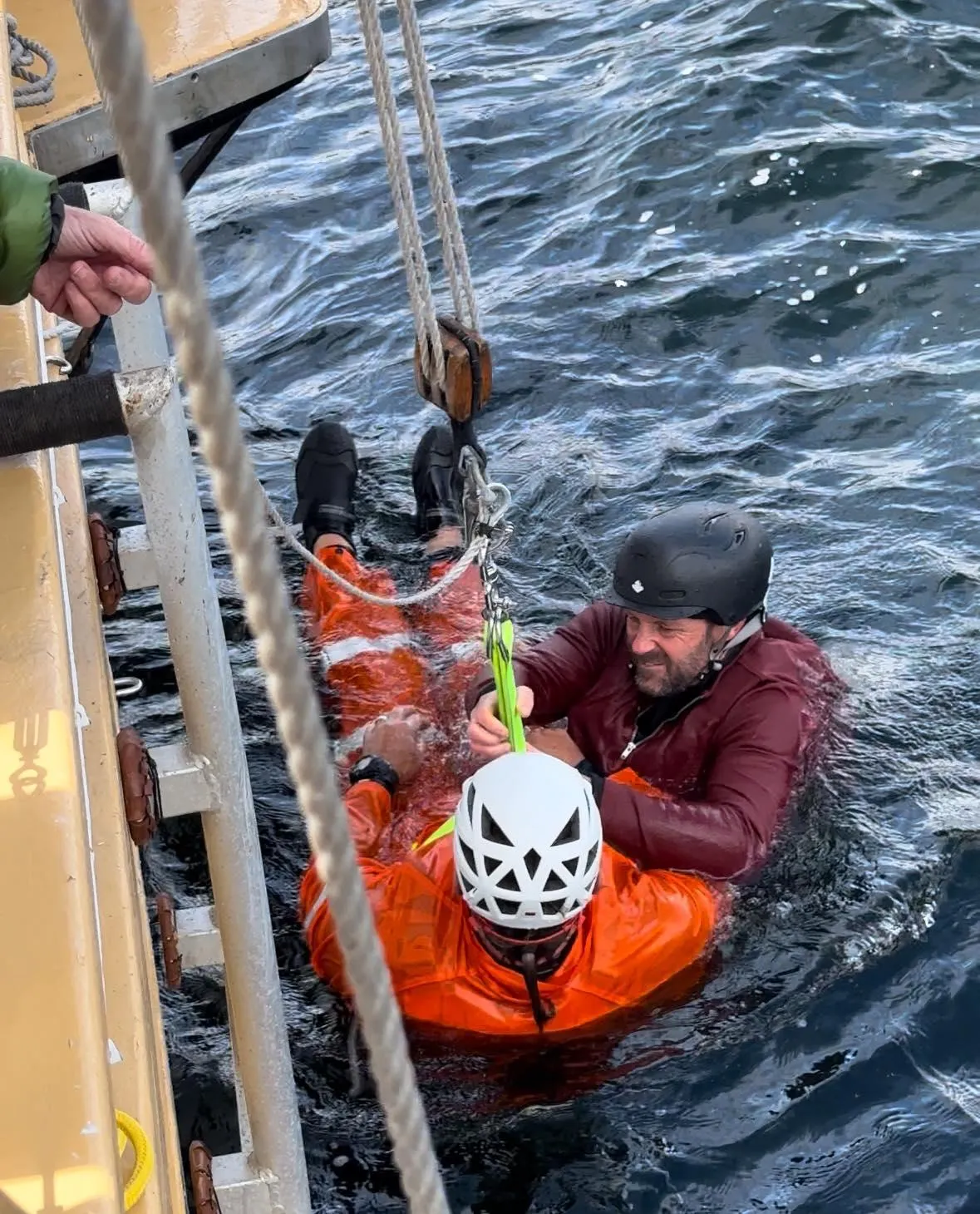
Amanda Hewson Beaver, RN — nurse and health educator.
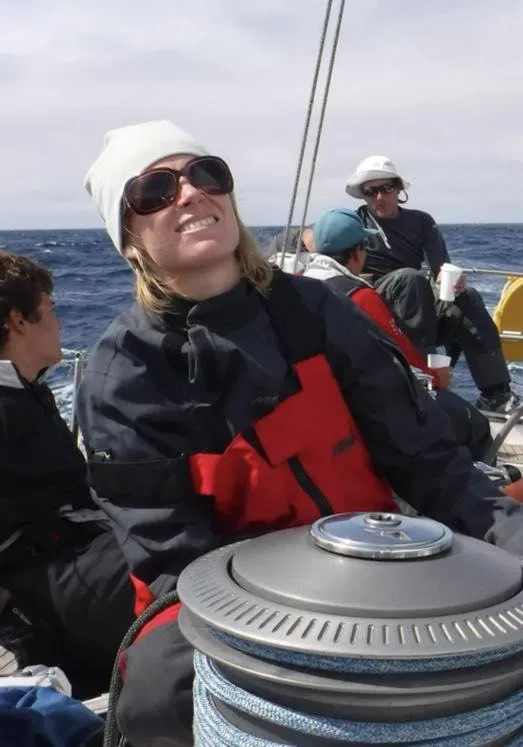
Thirty years of emergency clinical practice across intensive care, emergency departments, remote area nursing and aeromedical retrieval.
Approximately twenty years working at sea in superyacht, offshore racing and expedition roles. Former Unit Coordinator in Marine Medicine at the University of Tasmania.
I wrote the training a lot of you have already sat through.
This is the book about the part that training never covered.
A note on the two names you'll see me under:
If you've followed me for a while, you know me as The Yacht Medic.
That's my clinical work — medical training, STCW, and everything to do with what happens when someone's body is in trouble. It's where the medicine lives, and it isn't going anywhere.
Ocean Wild Leadership is where the people work lives. And, it is not just for yachting and Maritime! It is for anyone who typically works in remote, extreme and harsh environments, where help is often hours, or even days, away.
Psychological first aid, resilience, critical incident response, leadership under pressure.
What to do when a person — or a whole crew — is in trouble, rather than a body.
Same person. Two different jobs.
This is an Ocean Wild book, because it's about people rather than medicine.
If you want to know what to do about a chest pain or a head injury, that's The Yacht Medic, and it's a different conversation.
If you want to know what to say when the owner is shouting or a crewmate has gone quiet — you're in the right place.

Pricing
€89 — Individual copy. For you. Yours to keep, on any device.
€295 — Vessel licence. One purchase, your whole crew. Distribute it onboard, put it in the crew handbook, print the reference card for the mess.
€1,500 — Fleet licence. For management companies. Unlimited vessels, plus a 45-minute implementation call to work out how it fits your existing crew welfare documentation.
Delivered as a PDF, immediately after purchase, with access to online course development and content. Including cheat sheets and regular training ideas.
Nobody freezes because they don't care.
They freeze because they can't find the first sentence.
This book is the first sentence — four hundred times over.